BEAD-PC Study
Back to Research
Study Title: Blood Biomarkers for early and accurate diagnosis of Alzheimer’s Disease
in Primary Care (the BEAD-PC Study) – An Implementation Study of novel blood biomarker and digital technologies in diagnostic pathways in primary and specialist care towards an earlier and accurate diagnosis of Alzheimer’s disease
About the study
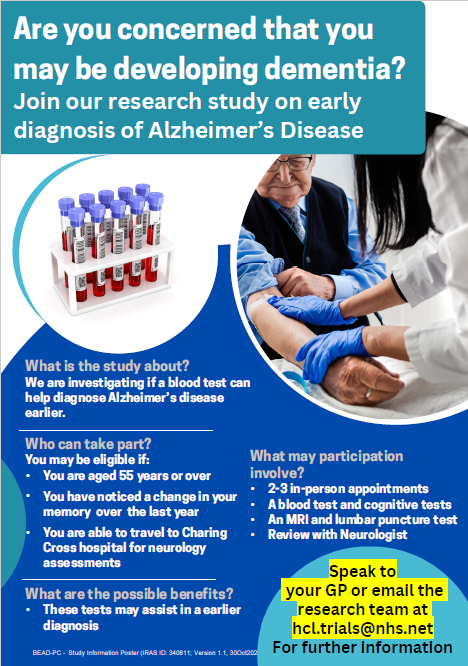
The BEAD-PC study focuses on whether a blood test for specific biological markers can be used to help diagnose Alzheimer’s disease in a GP setting. Diagnosing people at an early stage will allow for preventative measures of lifestyle interventions and access to medications which may become available and better access to supportive care in later disease stages.
The progression of the disease varies between individuals and the early stages may be characterised by only minimal changes in memory and thinking, which may remain stable, or progress to the later stages of dementia. These changes could remain undetected as the symptoms may be mistakenly regarded as normal age-related forgetfulness. However, dementia is not part of the normal ageing process. The aim of the BEAD-PC study is to assess whether a specific blood test in primary care can help diagnose Alzheimer’s disease at an early stage.
To enrol in this study, you must:
- Be aged 55 or over
- Have recent memory problems (noticed in the last one year)
- Be able to attend an appointment at a Cognitive Assessment Clinic and 1-2 subsequent visits to Imperial Memory Unit at Charing Cross hospital
- Be willing and able to undergo a lumbar puncture (spinal tap)
- Be able to provide consent
An Ethics Committee (EC) protects the rights, safety, and well being of study participants. An EC has reviewed this study.
If you think you are eligible and interested in taking part, please email hcl.trials@nhs.net. Study participation is voluntary by contacting us, you do not have to take part in the study.