The CommUniTEA project brings TIME to dementia care
What happens when we create T.I.M.E. for conversations about brain health before concerns arise? Through CommUniTEA, supported by an INSPIRE grant and working alongside the Octopus Dementia Working Group, we’re bringing brain health conversations into trusted community spaces (gurdwaras, mosques and mandirs) where a cup of tea becomes a moment for awareness, trust and early action.
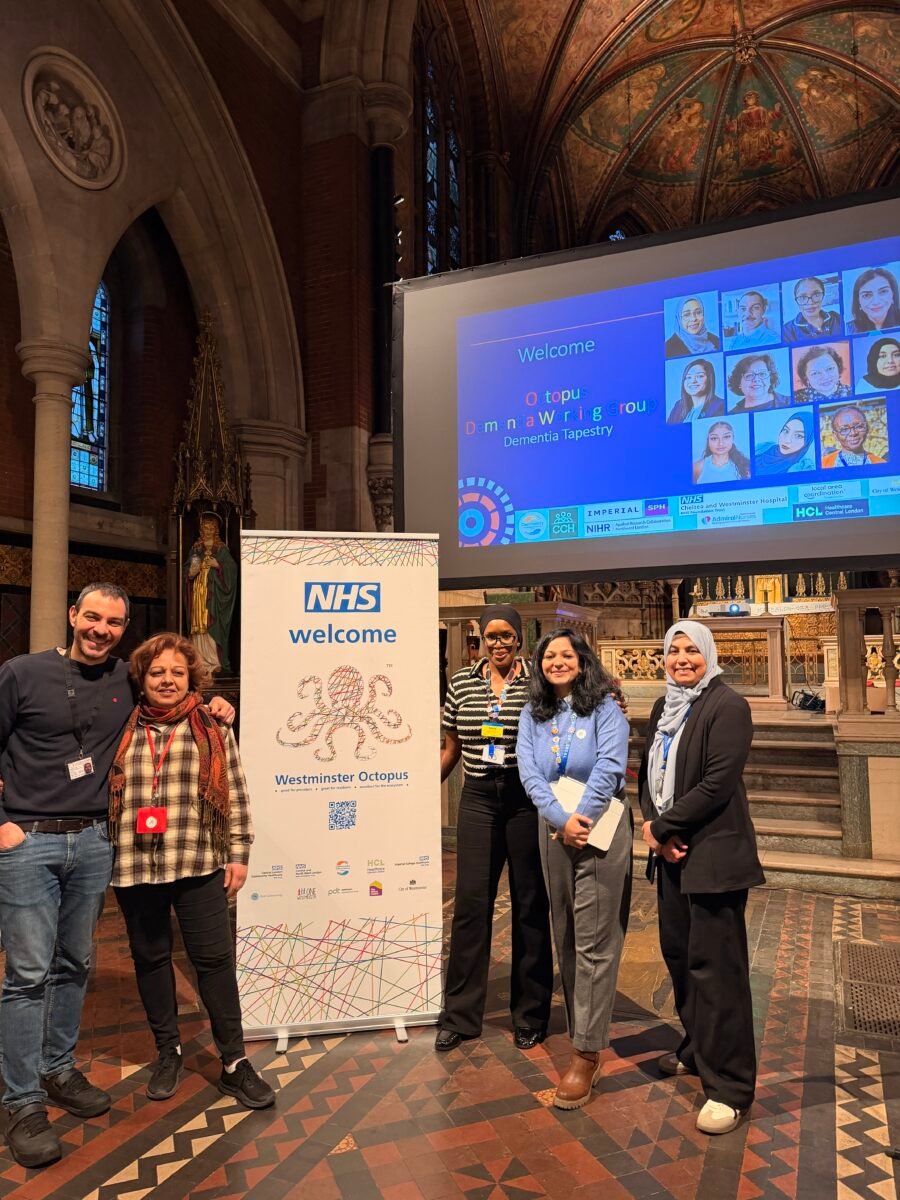
The Octopus is our model for community-led care that supports tackling imbalances and inequality in the system. It brings together the Local Authority (LA), the Voluntary and Community Sector (VCSE) and health colleagues for the service of our population. Through this approach, several working groups are in place that bring together specialists, from across the three areas, to share their expertise. The Dementia Tapestry team (Octopus Dementia Working Group) is one of these groups.
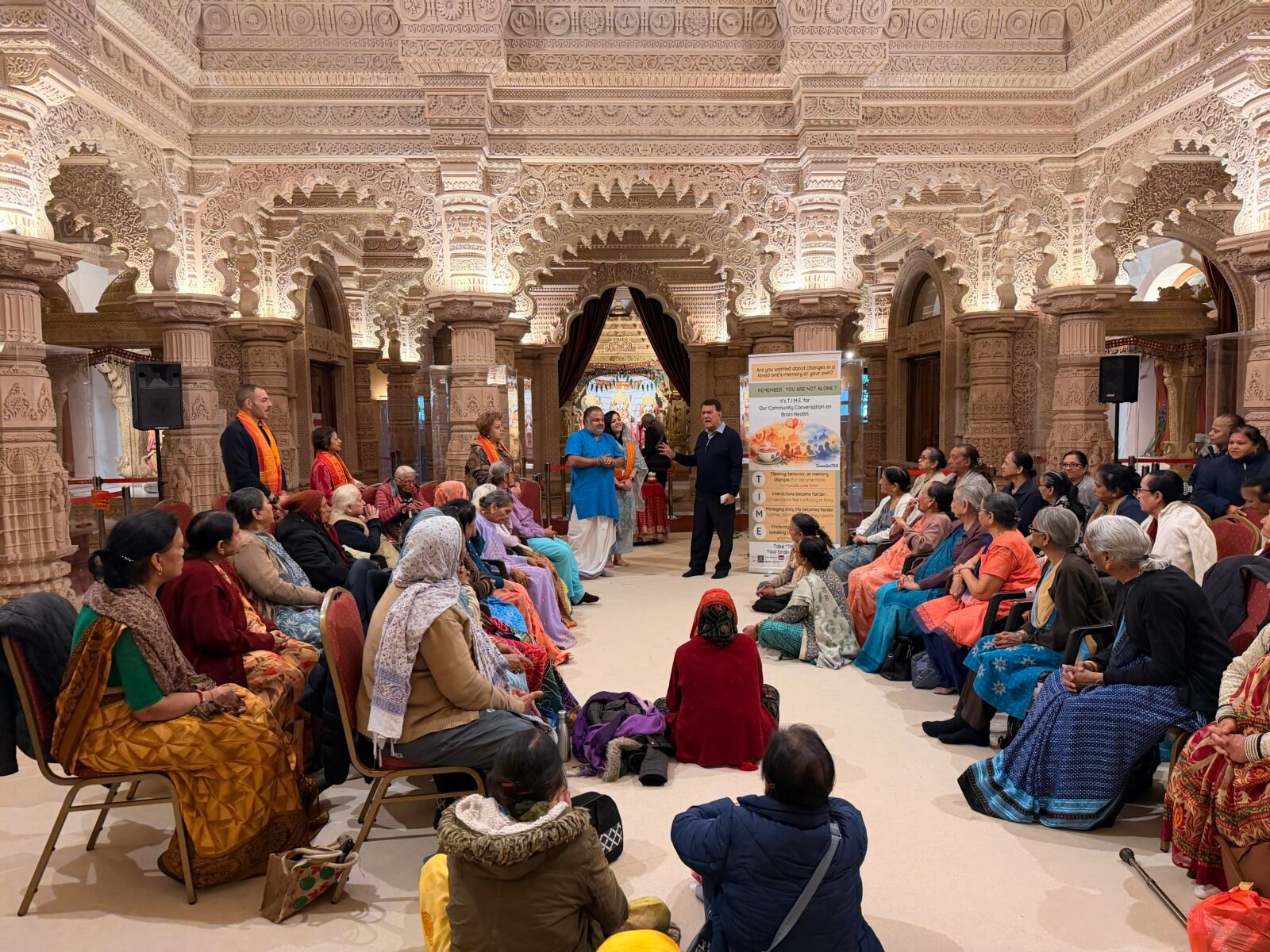
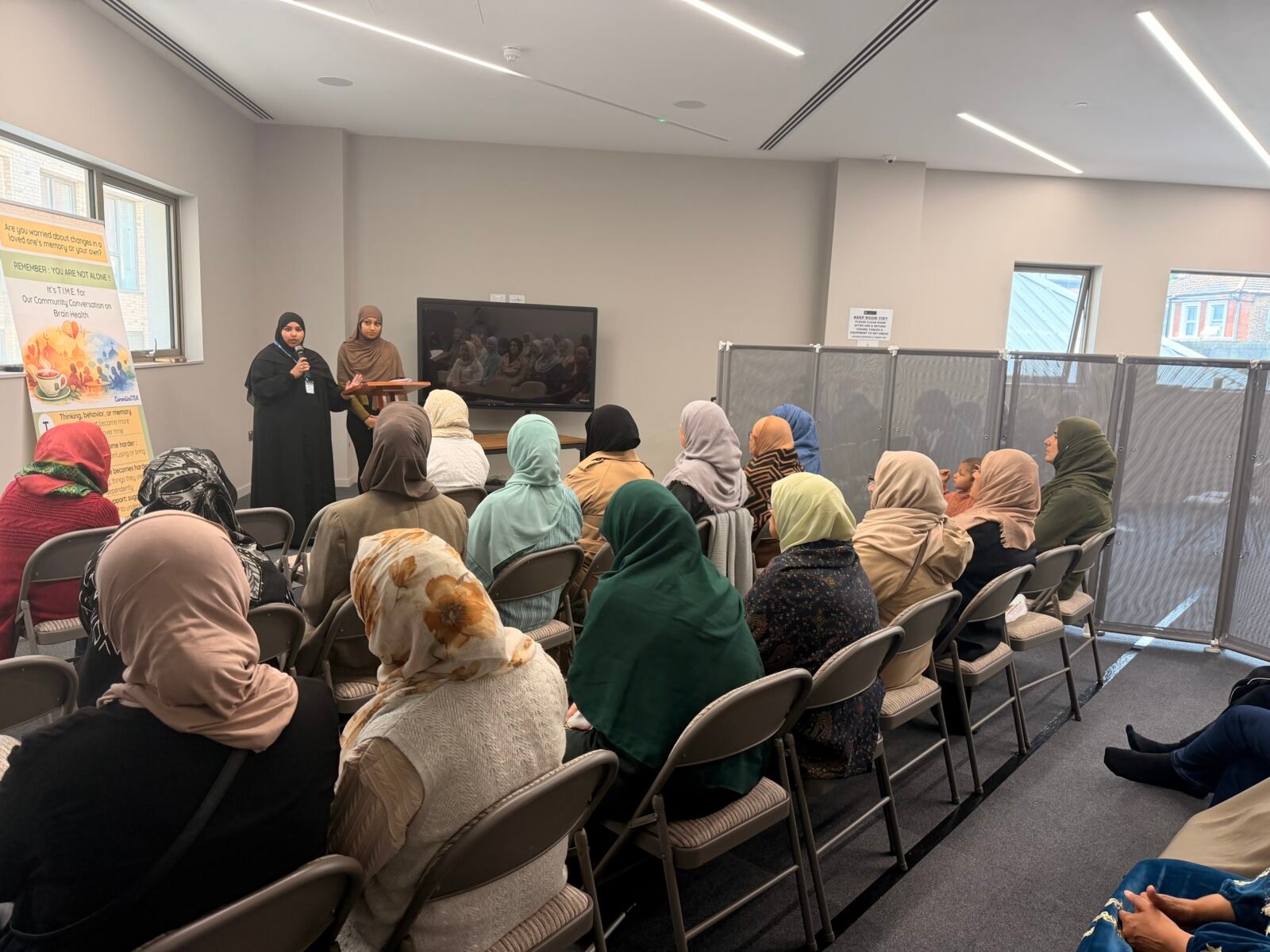
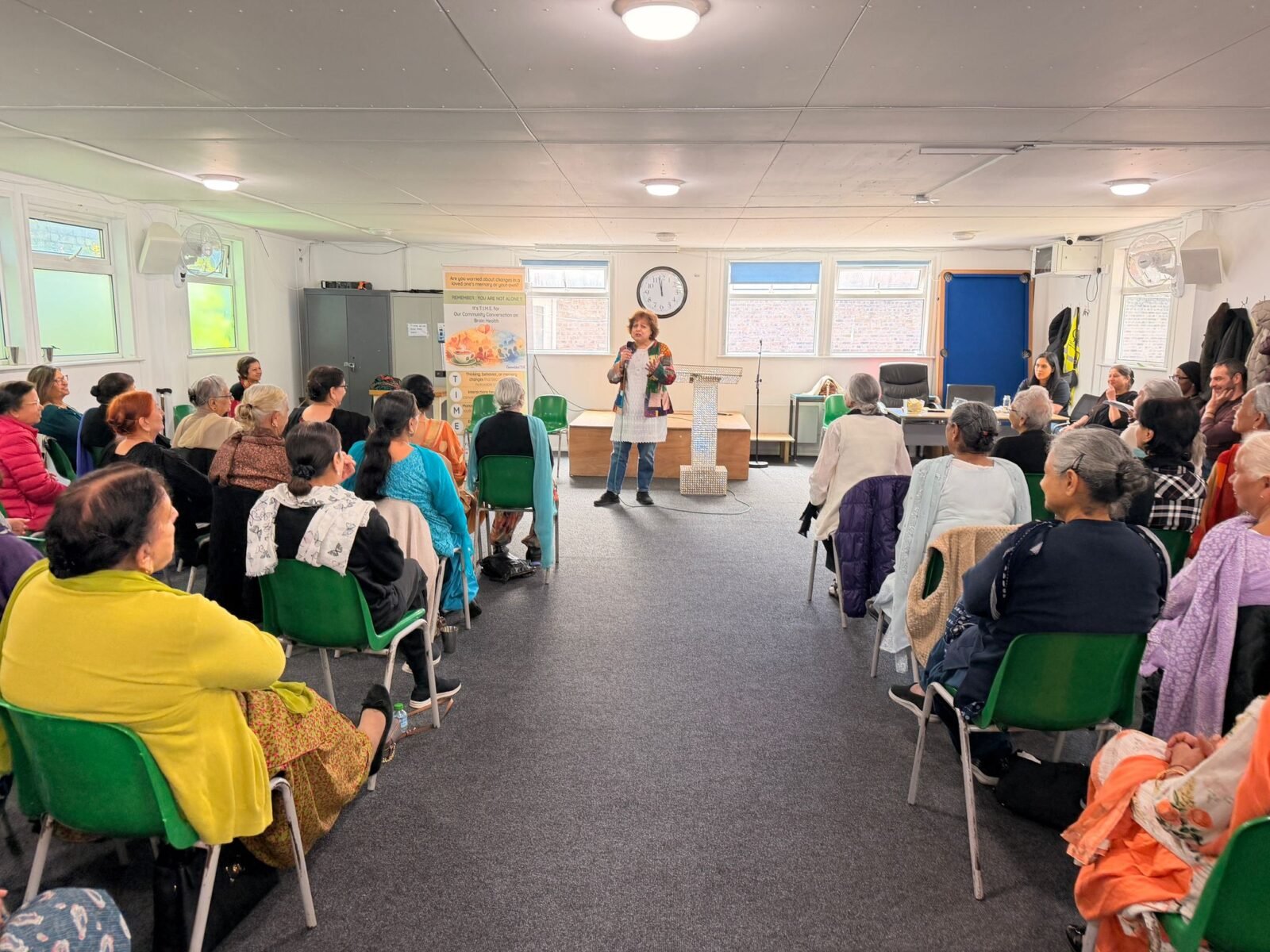
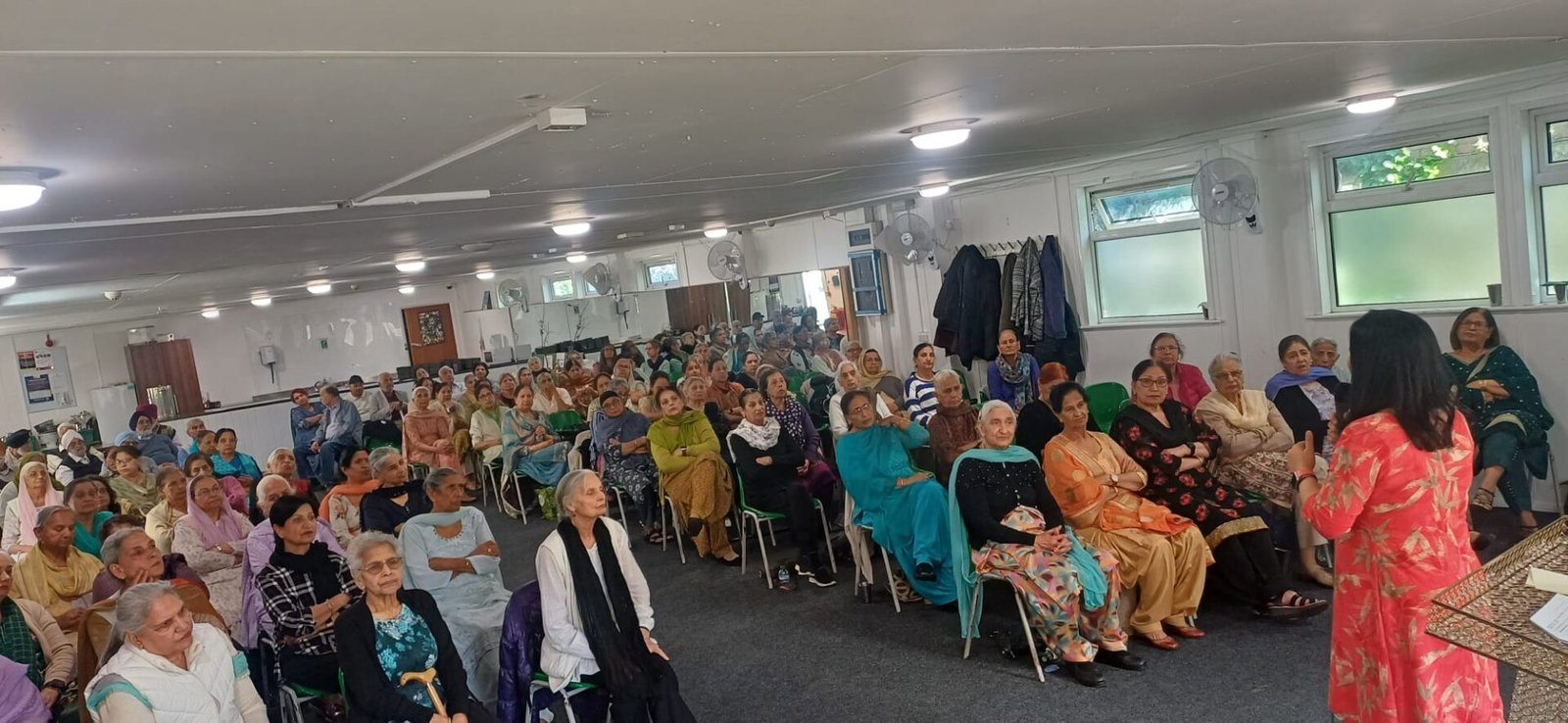
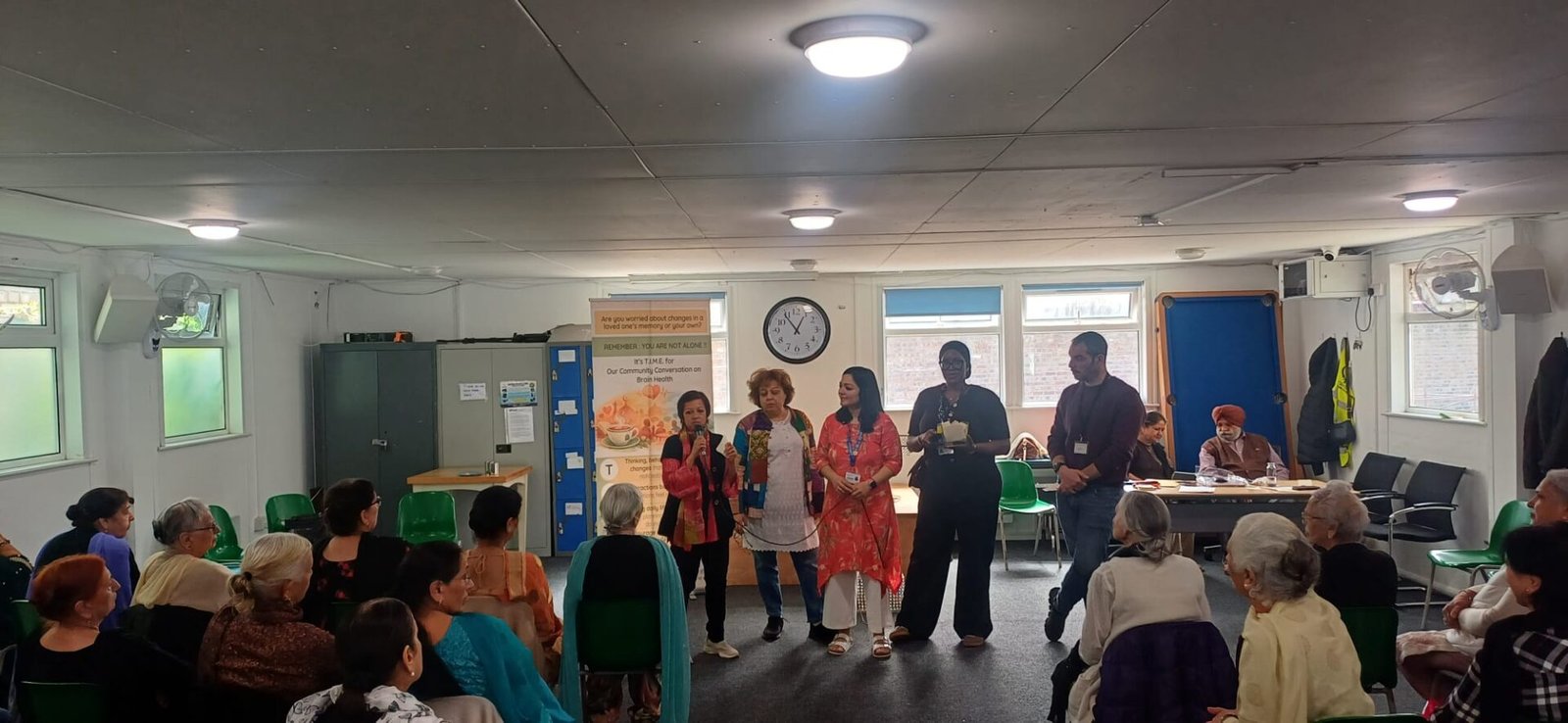
In the last few months, the Dementia Tapestry team delivered CommUniTEA, a series of four community brain health conversations held in trusted faith settings across North West London, including gurdwaras, mosques and mandirs. It was funded by the Alzheimer’s Research UK Inspire Fund; the programme was co-designed with faith leaders to ensure that the content was both clinically accurate and culturally meaningful.
The initiative demonstrated the value of engaging communities in familiar, trusted environments where important conversations about brain health could take place openly and comfortably.
The problem: dementia information isn’t reaching everyone
For many older South Asian adults in North West London, mainstream dementia information simply doesn’t land. Language barriers, cultural stigma, low health literacy and limited contact with health services all stand in the way. Families notice changes in a loved one and do nothing, because they have limited clarity on “what’s normal with ageing” and “what’s not normal” and when to seek for help.
The CommUniTEA team’s insight was that the answer wasn’t better leaflets. It was better settings. Faith leaders are among the most trusted voices in these communities and faith spaces are where people already gather, talk and crucially trust.
The initiative demonstrated the value of engaging communities in familiar, trusted environments where important conversations about brain health could take place openly and comfortably.
Programme impact included:
- Engagement with 322 community members across four events.
- Delivery across four London boroughs representing three faith communities: Sikh, Hindu and Muslim.
- Sessions supported in five languages including English, Hindi, Gujarati, Punjabi and Arabic with interpretation provided where required, while faith leaders naturally facilitated discussions in their own community languages.
How T.I.M.E. was developed?
The programme’s most significant outcomes emerged during the co-design process. one question kept surfacing: what do we actually want people to remember when they go home?
The team looked to stroke care for inspiration, where the FAST acronym (Face, Arms, Speech, Time) transformed public awareness. A faith leader asked the obvious question: why isn’t there something like that for dementia?
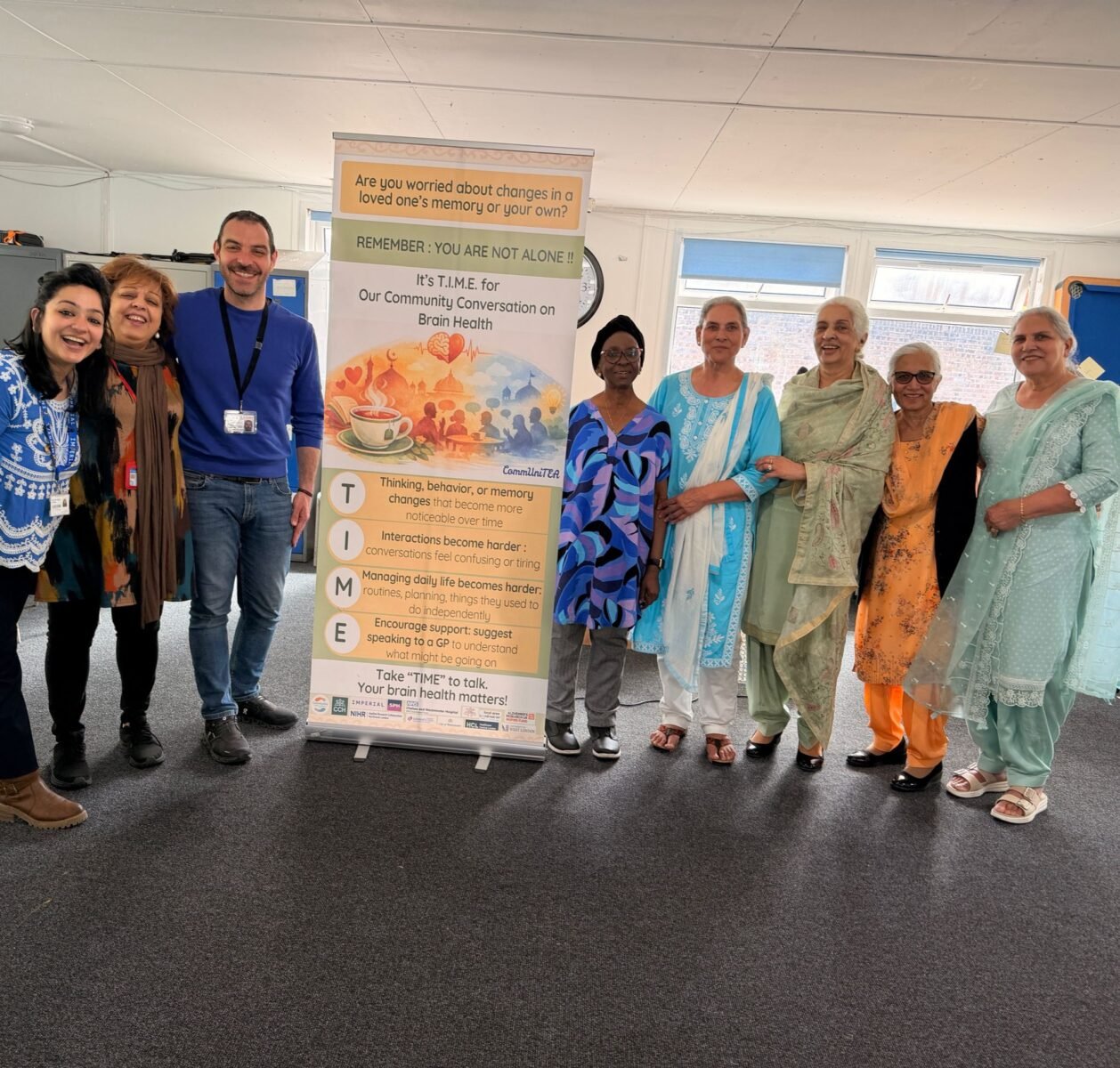
There’s a good reason. Dementia isn’t an emergency with a single identifiable moment: it unfolds gradually, varies enormously between people and oversimplifying risks mislabelling normal ageing. So the team set out to build something different which is not a diagnostic checklist, but a memorable prompt to notice changes and seek support early. Refined through iterative co-design and reviewed by Alzheimer’s Research UK’s team, the result was T.I.M.E.:
T – Thinking, behaviour or memory changes that become more noticeable over time
Noticing ongoing changes in how someone thinks, makes decisions, behaves, reacts, or remembers.
I – Interactions become harder
Finding conversations more confusing or tiring or withdrawing socially because they feel harder to follow.
M – Managing daily life becomes harder
New challenges with routines, planning, organising, or things they used to do independently.
E – Encourage support
Make time to talk. Suggest speaking to a GP to understand what might be going on.
The tea connection emerged naturally from the CommUniTEA branding: “Take T.I.M.E. to talk about brain health over tea.” In communities where tea is already the medium through which conversations happen, it clicked instantly. Faith leaders reported the acronym was easy to remember, easy to say across languages, and carried cultural weight “taking time” resonates with values of patience, care and family duty across South Asian traditions.

Measuring impact without a clipboard
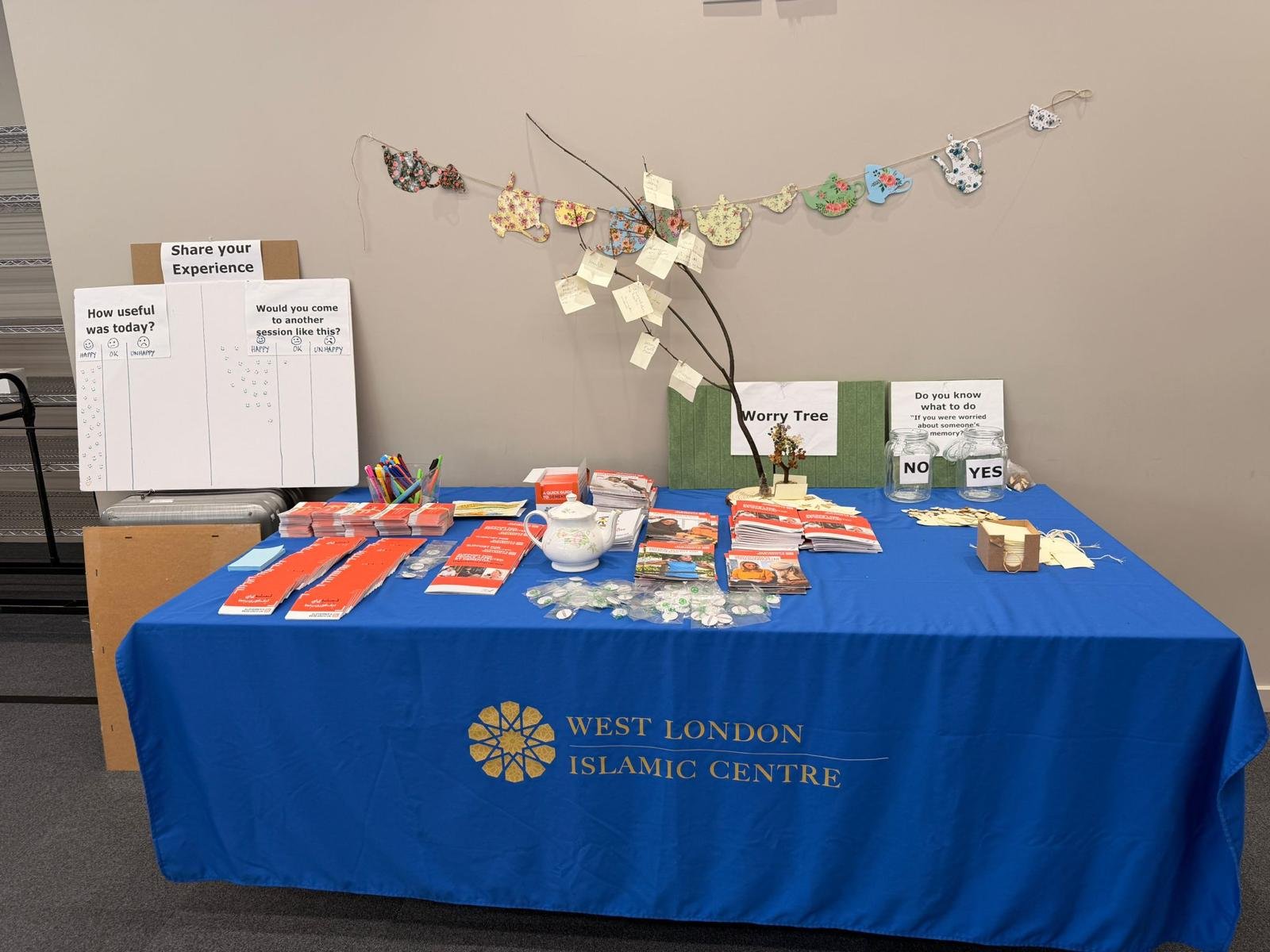
The programme introduced interactive engagement activities to encourage open discussion. One such activity, the Worry Tree, invited participants to anonymously write down their concerns and hang them on a symbolic tree. For many individuals, this represented the first opportunity to express worries relating to memory loss, dementia, caring responsibilities, loneliness and their own or a loved one’s health. The activity highlighted both the emotional impact of dementia and the importance of creating safe, supportive spaces where sensitive conversations could take place.
What’s next?
The response from participating communities has been overwhelmingly positive.
- Seven organisations have already invited the Dementia Tapestry team to deliver CommUniTEA sessions within their own communities. In addition, the team has facilitated two further events during Carers Week in Westminster in partnership with Community Champions and NHS colleagues.
- Faith leaders have also expressed a strong commitment to hosting regular monthly tea conversations, embedding brain health discussions into ongoing community life rather than treating them as one-off events. This creates further opportunities to expand conversations around dementia prevention, healthy lifestyles and reducing dementia risk.
CommUniTEA demonstrates the effectiveness of the Octopus model in practice by bringing together healthcare professionals, community connectors and trusted faith leaders to reach communities that mainstream services often find difficult to engage. While many older adults may not attend memory cafés or formal support services, they regularly participate in activities within places of worship. By building on these trusted relationships, the programme has shown how community-led approaches can encourage earlier conversations, promote help-seeking behaviours and support people to live well with dementia.
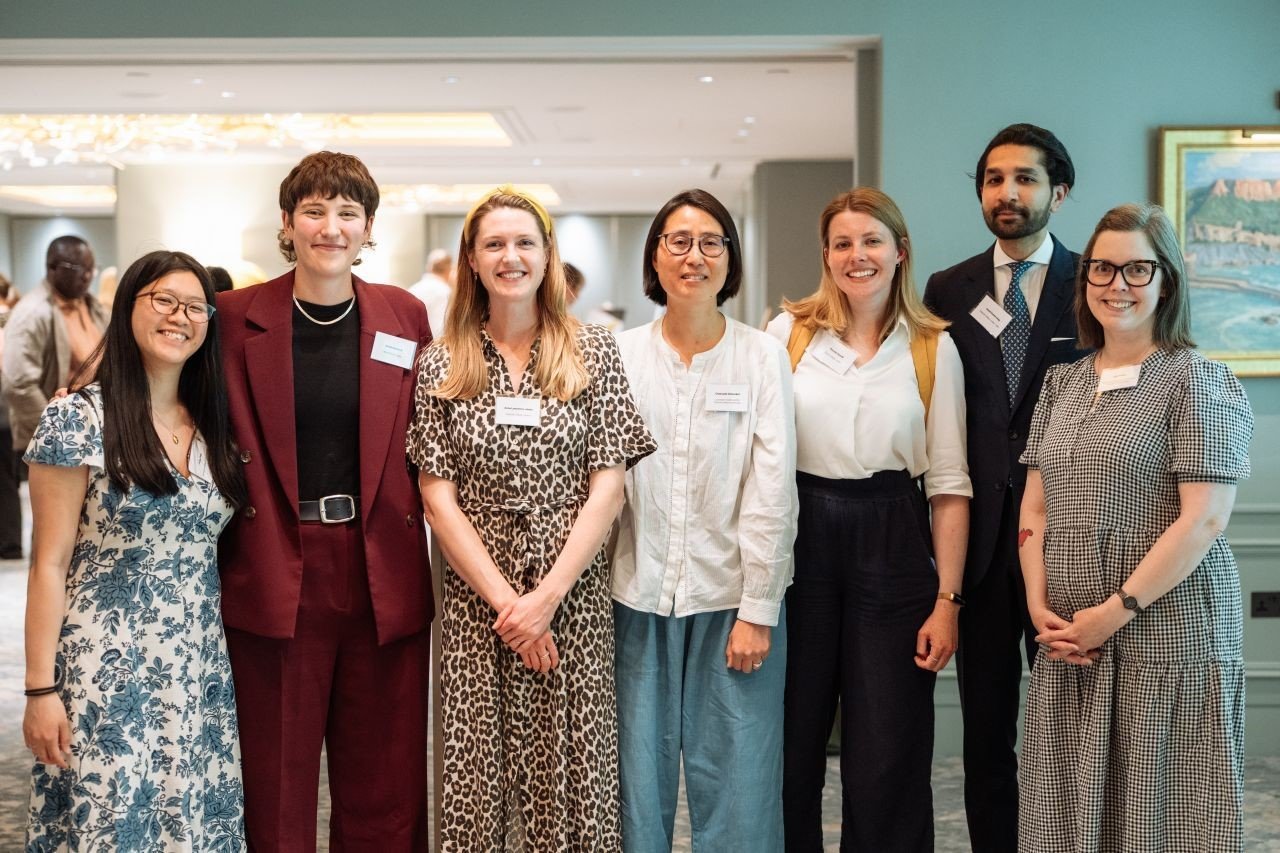
The success of the programme reflects the collaboration, creativity and commitment of the entire Dementia Tapestry team. Every team member contributed to the co-design, delivery and evaluation of the initiative, demonstrating the value of genuine cross-sector partnership and co-production.
CommUniTEA represents the beginning of a wider community movement to improve brain health awareness they do this by demonstrating that a simple conversation over tea can increase confidence, reduce stigma and improve understanding for more than 300 people, the programme provides a compelling example of how shared neighbourhood-based, community-led approaches can contribute to dementia prevention, earlier diagnosis and ongoing support.