Weaving Care, Together: A Neighbourhood Approach to Dementia
How the Octopus is bringing communities together to reimagine dementia care in Westminster
By Pallavi Nair, Cornelia Junghans Minton, and the Octopus Dementia Tapestry Working Group
In Westminster, someone diagnosed with dementia might see a GP in one borough, a social worker from another team, and a community group that neither has heard of. Care may exist, but it is fragmented: there’s little continuity, and no one is intentionally joining it up around the person who needs it most.
The Octopus Dementia Tapestry exists because a group of clinicians, researchers, community workers and people with lived experience decided that fragmented care wasn’t inevitable but was a design problem. A different way of working together at neighbourhood level might be the answer: building relationships across roles and sectors, running culturally resonant awareness gatherings with communities too often left out of the conversation, and co-creating practical tools. This is what joined-up working looks like when it starts from unmet need, not organisational structure.
The Scale of What We’re Facing
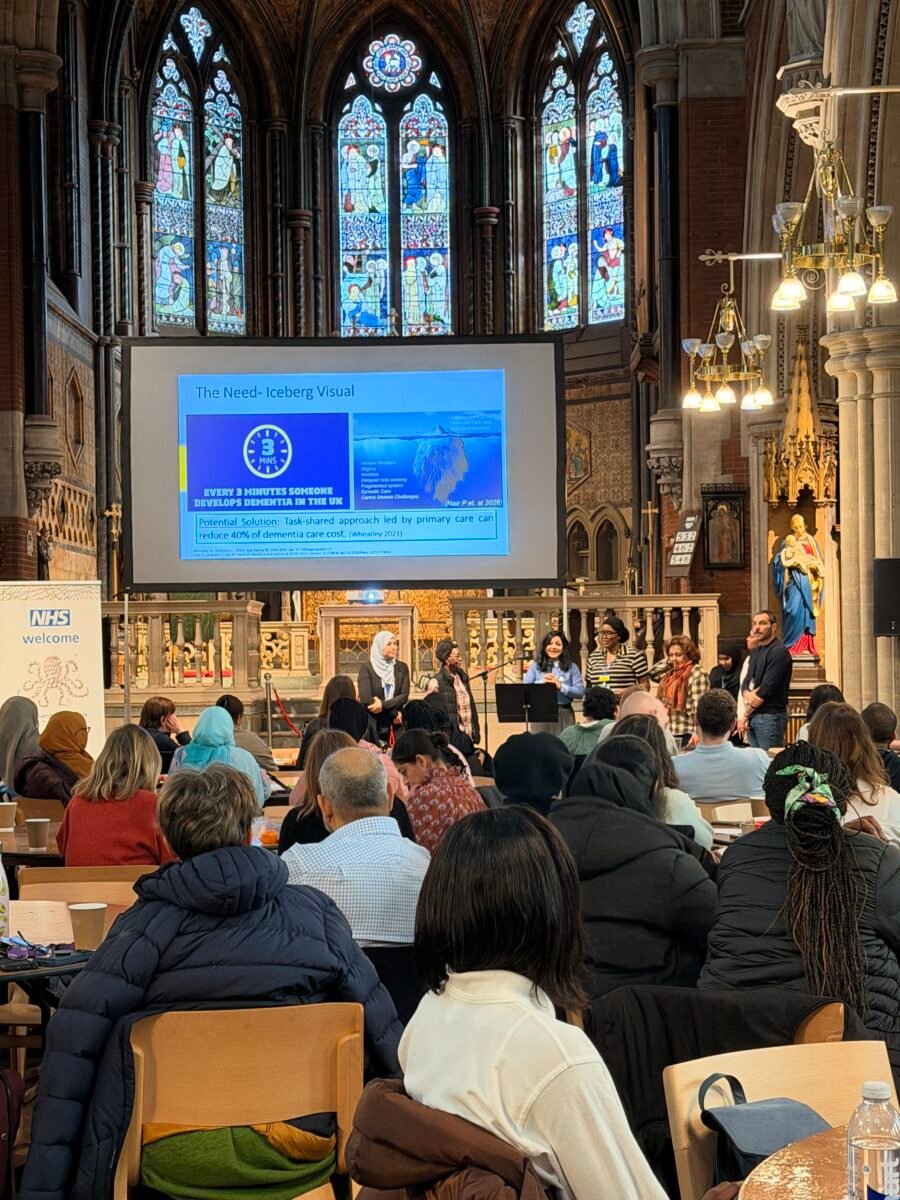
In the UK, someone develops dementia every three minutes. Diagnoses are expected to rise sharply in the coming decades, yet many people still wait too long for support, and when it arrives, it often feels fragmented, impersonal and difficult to navigate.1-2
Behind the statistics are realities that rarely make it into policy documents: stigma that prevents early conversations, isolation after diagnosis, and cultural barriers that shape how symptoms are understood and disclosed. These experiences often remain hidden, like the part of an iceberg beneath the surface. By the time support is accessed, people are frequently at a point of crisis. There is a gap between diagnosis and meaningful help.
This is where neighbourhood-level care comes in: Timely, more proactive support, grounded in trust and rooted in community has the potential to change trajectories, not just outcomes.
The Octopus: A Different Kind of System
The Octopus model launched in 2023 by Healthcare Central London (HCL), is Westminster’s Integrated Neighbourhood Team model, offering a useful way of thinking about neighbourhood health. It brings together three “hearts” the Local Authority, the NHS and the Voluntary and Community Sector with eight “tentacle” connector roles including Community Health and Wellbeing Workers (CHWWs), Social Prescribers, Care Navigators and Community Matrons. These roles reach deep into neighbourhoods to join up services and build trust.
The Octopus Dementia Working Group, which we call the Dementia Tapestry sits within this structure. What we are building draws on the Octopus vision: a way of working that recognises complexity and responds with collaboration rather than fragmentation. This isn’t about adding another layer to the system, but weaving what already exists into something stronger and more intentional. We asked ourselves a different question: What if dementia care felt less like a series of different services and more like seamless care? That question sits at the heart of our group.
Meet the threads
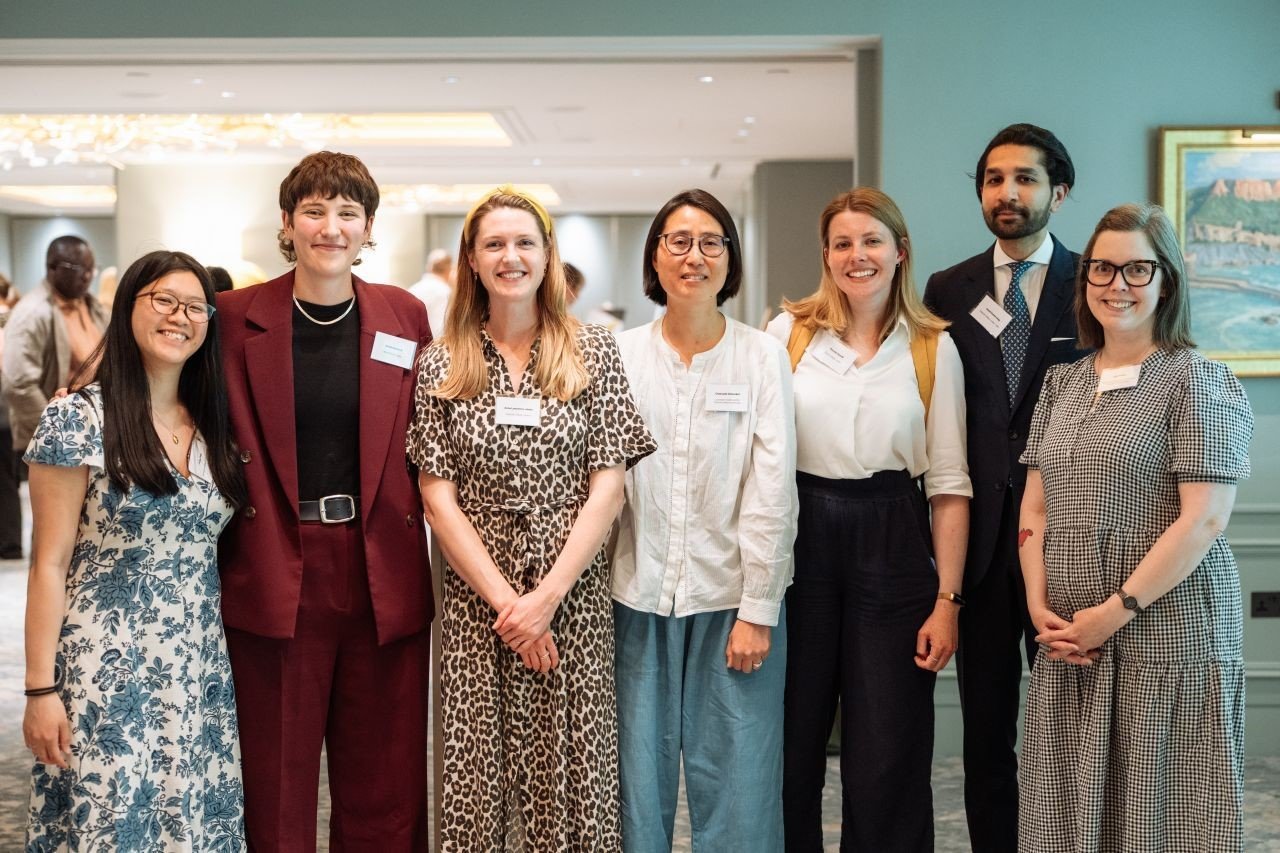
The Dementia Tapestry team includes Angie Gill (Community Matron), Anima Begum (Social Prescriber), Dr. Cornelia Junghans Minton (GP/Associate Professor), Diana Okoukoni (Admiral Nurse), Desiree Mohammed and Emma Candice (Dementia Care Navigators), Marco Sepe (Dementia Advisor), Dr. Pallavi Nair (Applied Dementia Researcher), Nilanjana Paul and Comfort Idowu-Fearon (Public Contributors with lived experience), Sadia Moh (Community Health & Wellbeing Worker) and Sonjide Hussain (Local Area Coordinator)
No single thread is sufficient on its own. But when woven together, they create something more responsive and more resilient, because dementia does not sit within one service. And neither should the solution.
“A future where no one has to face dementia alone, shaped by communities, driven by true collaboration and grounded in research.”
The Dementia Tapestry’s shared vision
This way of working also challenges traditional hierarchies. Rather than operating in silos, we are learning to work alongside one another: sharing insights, building relationships and co-designing approaches that are shaped by the people we serve. Shared leadership in action.
From Conversation to Action
The Dementia Tapestry began as a conversation in late 2024. Through a period of listening, connecting and building shared purpose, it grew into a formal working group by early 2025. Through quarterly in-person meetings, we mapped our collective strengths and networks, created space for genuine co-design and began turning ideas into action. Our first tangible initiative is already underway.
CommUniTEA: creating space and time for connection
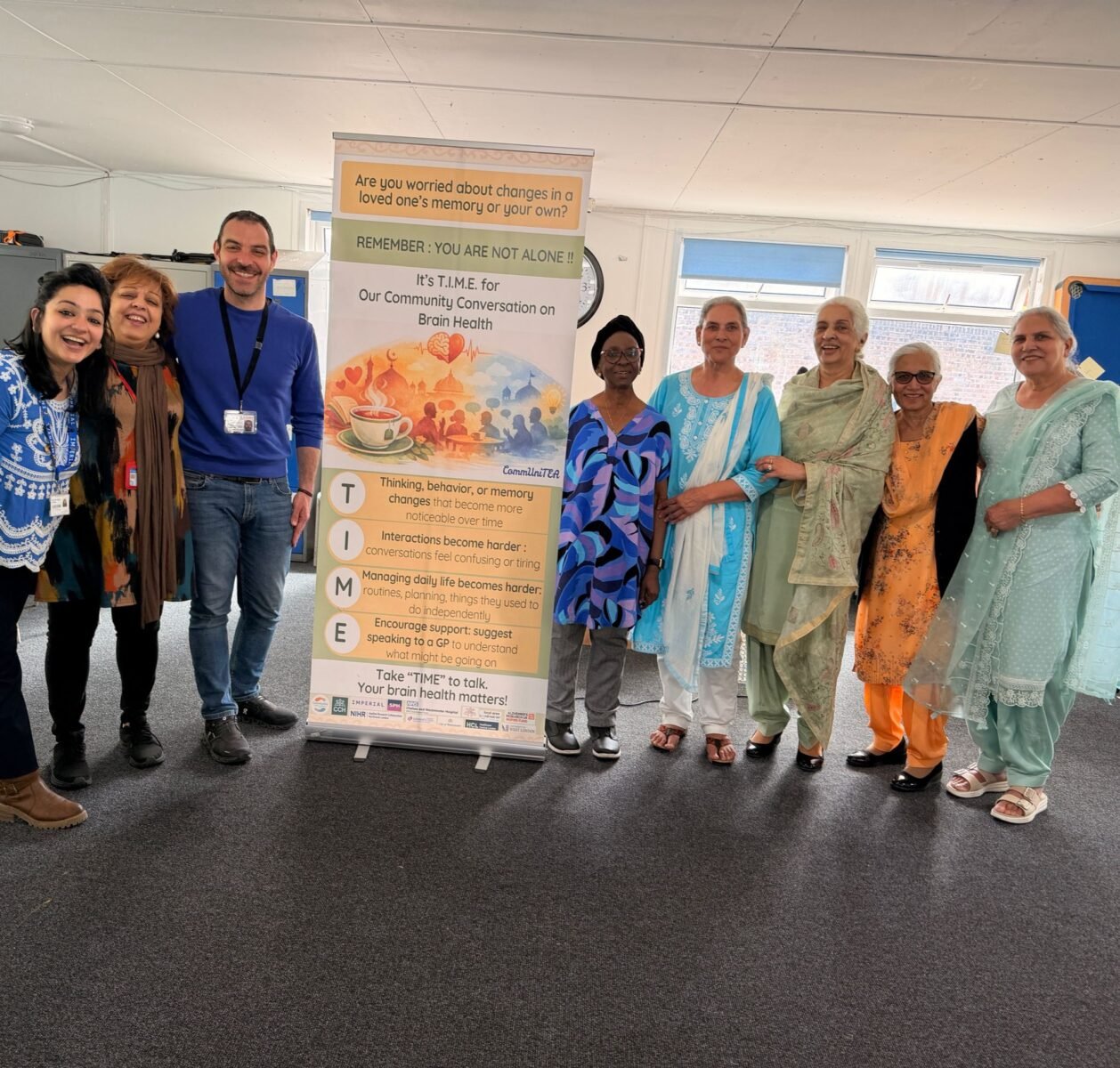
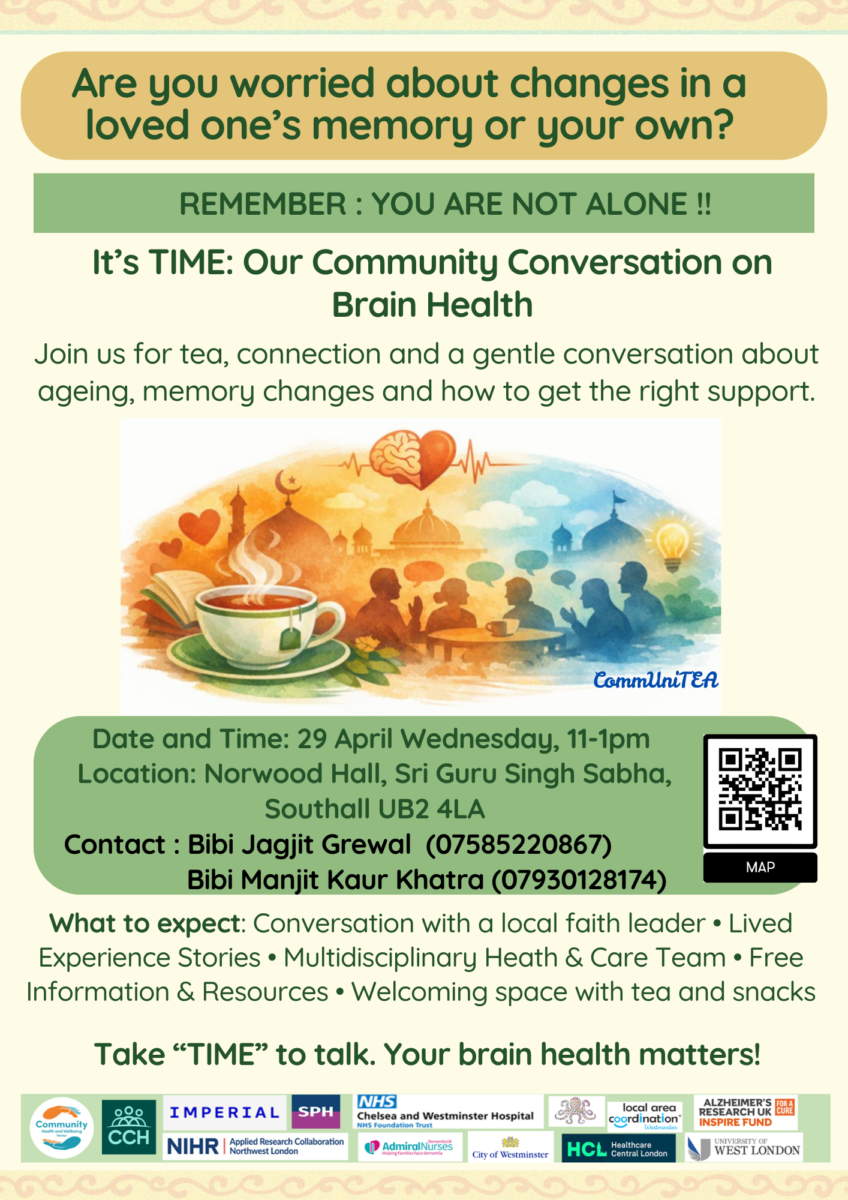
CommUniTEA is a simple but intentional programme centred on bringing people together over tea to talk about memory, ageing and brain health, particularly within South Asian communities, where dementia can carry stigma and where conversations are not always easy to begin. Working with trusted faith leaders across Hindu, Sikh and Muslim communities, these gatherings are being co-designed to feel familiar, safe and culturally relevant.4 They are not formal health sessions but informal spaces for dialogue and connection. In many cases, it is these small, local interactions that open the door to earlier support.
The first CommUniTEA awareness gatherings are scheduled in April and May 2025, funded by Inspire Fund (Alzheimer’s Research UK).
What Comes Next
This is an evolving, collaborative space that prioritises care experience, cultural understanding and community voices as active partners in shaping dementia support. It aligns with the wider shift towards neighbourhood health, where care is designed around people and place, not organisational boundaries.
There is no shortage of dementia strategies and frameworks. What this work offers is a different emphasis: less on creating new structures, more on connecting existing ones around the needs of communities. Starting from what’s unmet. Building from what’s already there.
This is just the beginning of a bigger journey together.
If you have lived experience or work in dementia care and would like to partner with us, we would welcome the conversation. Whether that means joining a meeting or simply sharing what’s working in your area, get in touch. Contact: Dr Pallavi Nair, p.nair@imperial.ac.uk
References:
- Alzheimer’s Society. Dementia is the UK’s leading cause of death. London: Alzheimer’s Society; 2025. Available from: https://www.alzheimers.org.uk/about-us/dementia-UK-leading-cause-of-death
- Wheatley A et.al. Age Ageing. 2021 Nov 10;50(6):2230-2237. doi: 10.1093/ageing/afab114. PMID: 34240114; PMCID: PMC8675435.
- Nair P et.al. Front Dement. 2026 Jan 12;4:1719630. doi: 10.3389/frdem.2025.1719630. PMID: 41602220; PMCID: PMC12832384.
- McDermott, O., et al. International Journal of Geriatric Psychiatry. 2025 40: n.pag.